Spotlight On Livestream
Spotlight On Robert Anton Wilson with Author Gabriel Kennedy
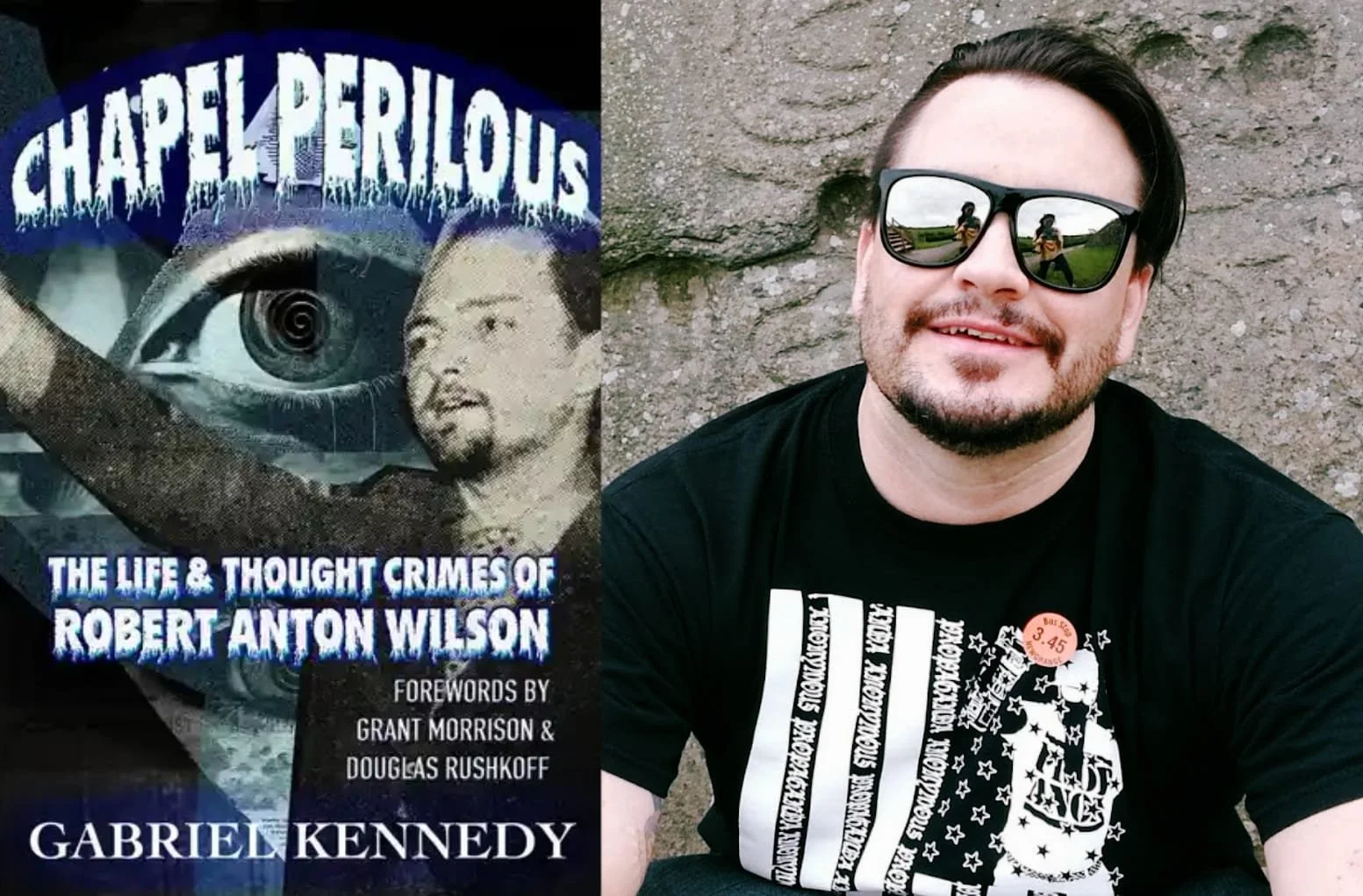
A live discussion and Q&A with Gabriel Kennedy, author of the book ‘Chapel Perilous: The Life and Thought Crimes of Robert Anton Wilson’
Gabriel Kennedy, author of the book Chapel Perilous: The Life and Thought Crimes of Robert Anton Wilson, joins Spotlight On host Lawrence Peryer for a special live discussion about all things RAW on Saturday, November 23, 2024, at 3 PM Eastern/Noon Pacific.
Gabriel joins us to discuss Chapel Perilous, his first book and the first biography of Robert Anton Wilson, the countercultural novelist and underground philosopher.
Registration is free, and we hope you will join us. Bring your questions. Register today.
After It Is Over, Watch On Demand: https://www.youtube.com/watch?v=1Ci7We0qE8Q&t=307s
Lawrence Peryer: Saturday, November 23rd, a day that, has chosen us and we’ve chosen it to welcome everyone here and to thank everybody for coming and to join us to celebrate the release of a terrific new book about a person that many of us here admire, if Not Revere. And that book is Chapel Perilous, the Life and Thought Crimes of Robert Anton Wilson.
And it’s written by my friend and colleague and my guest today, Gabriel Kennedy. And there’s so much to cover, and I wanna make sure that we leave space for some audience discussion later on. So I think like good chaos, magicians, we should just get right the fuck to it and dispense with ceremony.
So, Gabriel, welcome and congratulations on the book.
Gabriel Kennedy: Thank you so much, man. Great to be here, man.
Lawrence Peryer: Yeah, it’s great to have you. So I also wanna tell our audience to please feel free to, to hit up the chat. I’ll do my best to keep an eye on it and if people have questions or if they just want to talk to each other.
That’s all good. and, without further ado, I, I think what I’d like to start is, by asking you, you know, what was your entry path to Bob? what was your first Bob, if you will?
Gabriel Kennedy: yeah, it was, I think, I guess it was, it was high school, the senior year of high school. it was in math class. And, a fellow student who was now, you know, a, a very good, bizarro fiction writer and writer in general. a man named Brad Bradley Sands.
we were classmates and, you know, Brad would always come into class with all these books, these, these like huge books like James Joyce, you know, and a bunch of Robert, an Tom Wilson. And one day he came in with a Lumina trilogy and, I was intrigued by the cover of the book and I asked him, you know, let me take a look at that.
looked at the back, you know, cover. Mm-hmm. talked about, The secret society called the Illuminati, that, that run the world. And if you look at your dollar bill in a certain way or something, you could see all the, the symbols for it. So that was it. That was the first time I was ever introduced to like a notion of some sort of clandestine secret society that is able to pull all the strings and, and control everything in the world of a planet of, you know, how many billion people.
I read the first few pages and I think ’cause it was set up like a, a pulp detective novel, I think that really got me. and I was just totally intrigued by the story. And I read it that summer, my senior year of high school. And and I was hooked. I was absolutely hooked and it, I think what a lot of things stood out.
But, you know, I’d, I’d gone to Catholic school, my whole life at that point. I got kicked outta Catholic school in my senior year and and that’s when I read Illuminati Trilogy. So it was a nice, deconditioning period in some ways. And Bob’s book played a big part in it because, you know, that’s when he talked about, you know, the HB Lovecraft mythos and the old ones and you know, Kullu and y saga and that scared the living shit out of me.
I was blown away by the fact that someone there could be like gods that are older than the God that exists and the God that I was told about. And that freaked me out. ’cause you know, the. When I thought about the far out things as a, as a child, obviously it was always through the lens of a a, a Catholic sort of paradigm and stuff, you know?
And that book just like opened so many doors and like built a whole house, and then it opened all those doors, you know? And, it left enough clothes for me to want to keep wandering around that house, you know? Yeah. Figuring out what’s all this about.
And so that book really like inspired a, a a, an intense kind of interest in like, history, you know? I was about to go into college, so Lumina Trilogy really became like this, like, and, and Robert Anton Wilson became this kind of, motivating force just to kind of like do my own research while going to like college and stuff.
Lawrence Peryer: Yeah.
Gabriel Kennedy: Illuminati trilogy, they did it. I think on purpose like that, it, it’s, that pope version, it appeals to teenagers especially, I think,
Lawrence Peryer: My way in was, was Cosmic Trigger, which I think is probably second to, to the trilogy in terms of how people may, may have come into Bob. But I, I always tell people like, especially that, that that trilogy, it’s the closest you can come to the feeling of psychedelics without actually putting anything in your body.
Like his, his work is uniquely able to, to, to do something, to give you ego death while you’re reading and certainly to get you to question, all your realities. It’s really incredible.
Gabriel Kennedy: A hundred percent.
Lawrence Peryer: Yeah.
Gabriel Kennedy: He, was able to do that, you know, and I mean so many people during the interviewing of, of this, my book.
You know, spoke about that. Like his, his magical use of language, he, he sort of did, while Robert Anton Wilson really did, display or show, you know, or implement hypnotizing techniques in his, in his work.
Lawrence Peryer: At what point did you have the audacity to think that it was time for a Bob biography and that you should be the one to do it?
Gabriel Kennedy: Well, before Bob died? No,
Lawrence Peryer: you were carrying it for that long.
Gabriel Kennedy: Bob died in 2007 and, I was a part of the maybe Logic Academy, crew. there was about maybe 20 of us, maybe 23 of us, that were like kind of hardcore, Members of the, maybe Logic Academy, which was an online teaching, remote teaching academy that Wilson, started with his friend and collaborator, Lance Bowser.
Bob started maybe Logic in 2004 and for the last three years of his life, me and a bunch of Bob heads were talking to him all the time, mostly through the website, through classes and stuff. And everything kind of coalesced, like this is my first book and for a long time I held onto this notion that a book about Bob was going to be my first book.
So I’ve been working on this book for a number, like almost since he died, really. but in fits and starts. and, I wrote my way into the biography. If, if you will. I wanted to write books about Bob’s philosophy. I wanted to write about, you know, Wilson’s, you know, sign notions of scientific philosophy as compared to like modern day academics and stuff like that.
And then I realized like, I, I know this is gonna be a lot of work, you know, like I’ve, yeah, I, but, but it was very fruitful. It was very, very good. because. What I was doing was just landing on, like I said, like this biography. ’cause I wrote through all of Bob’s ideas. Like I just, I have tons of notebooks on it.
I basically have like two other books, you know, two small books about Bob’s ideas. and then I just eventually got to the point where I knew I needed to ground all these ideas because Bob moved around so much and his ideas shifted a little bit through time. I wanted to contextualize, his thought crimes, right?
And, and really ever since reading Cosmic Trigger, I was fascinated by how much this guy moved around, during the seventies. Seemed like he was moving every other few pages, and I couldn’t understand how a man who could produce like such an amazing work could be moving around so much and have a family of, of, of, you know, a wife and four kids and a dog or two and you know, maybe a, you know, cat here and there.
He was, he had his dying mother live with, with him too, during the late seventies. And, I don’t know how Bob did all this stuff, you know? Yeah. And so I was completely fascinated by that. And, I wanted to ground his ideas, like I said, and then I eventually landed on that, you know, and, in a villa in Portugal, a very glorious time.
And, and I was like, this is it. This is what I’m gonna do. And then I’m gonna, I’m just gonna write this. At first it was like, I’m just gonna write this biography, a biographical spine, to then utilize for the book. And that just became obviously the, the book itself. Because it was just so like interesting, you know?
And I. One question led to another, and then suddenly I was like, Saul Goodman and Illuminati, and, and I was looking for the Illuminati files, you know, the Illuminati memos of Bob’s life. And I got led around the country and, and, you know, into special collections, libraries, you know, all over America. And then, you know, even into Ireland a little bit, and, you know, speaking to people, you know, deep into Europe, you know, all trying to find out about, more about the man who wrote or co-wrote this amazing book and wrote so many other amazing books, you know?
Lawrence Peryer: Were there, were there any troves in particular that you came across that were, that were either like surprising fines or that were particularly fruitful? You know, because I, I had imagine when you, when you learn that there are papers somewhere, you might not be entirely sure what to expect, or you might have some suspicion about what it holds.
But did you, were there places you went where you were like, oh, this is, this is the goods.
Gabriel Kennedy: Great question, man. you know, all of them in a way felt like that, right? every new find was like, another like gifts, right? Another
Lawrence Peryer: Yeah.
Gabriel Kennedy: and, I got those from Admiral Wrightly who, you know, fellow writer spent a lot of time writing about, discord unionism, and he inherited the Discordian archives, excuse me, which, he, he was given them by, And, at one time, Bob had held those archives, ’cause those are like Greg Hill archives and they’ve accumulated over the years.
So Adam, you know, lent me a bunch of amazing stuff. Letters from Bob to Greg Hill. Those were really, really, that was a treasure trove. Seeing, you know, the exchange between the, the, the, the legendary mysterious, mythical Greg Hill and, and Robert an Tom Wilson. You know, so much has been said and written about Kerry Thornley, but you know, who is Greg Hill?
Right? Who is Gregory Hill Eclipse? The, the younger, and, where’s it eclipse the elder?
Lawrence Peryer: did Maek Clipse, the, did you get any further insight? Like, can you answer that question any better? Who was Greg Hill?
Gabriel Kennedy: Greg was, had a huge heart. He was a very, very good friend, a very loyal guy.
For instance, when Bob was going through what he was going through with Carrie, Thornley, I guess around 1975, you know, Wilson writes that Kerry Thornley pretty much had like a schizophrenic breakdown. And was sending crazy letters to him and other people and, Robert Shea has a letter sort of addressing that as well to, to Greg Hill, like, Hey, Carrie’s a little much right now.
Greg Hill, has a letter to Bob, which is like, you could see that like, wow, this is Hill’s oldest friend, like Hill is there with Carrie, when even Bob was like, Hey, you’re too much right now. Yeah. Like, imagine Wilson being like that. And Greg, so Greg Hill, writes a letter.
I’ve read that letter from, from Greg Hill to, to Wilson sometime around 1975. Like, yeah, I’m, I’m with Kerry right now. He’s going through a lot. This is very intense for him and, and whatnot. So, hill as well struggled with alcohol. so there was some really interesting letters. Between he and Wilson, addressing Pretty much, when Bob was living near, hill in Northern California, like they, they were living closer than they ever lived before for a number of months.
it was during a time when Hill had started sort of like a failed, you know, Kind of community wasn’t really like a commune. They wanted to start like a whole Discordian community, him and a few other Discordants. But like, by the time that Bob and his family showed up hill, the, the, the community was falling apart and Hill was like holed up in his room.
He was breaking up with his wife or something like that. And he was just in an alcoholic, just like, like Downs spin, you know, contemplating suicide like every day. Like he has in a letter to Bob, like, and I would about him looking at like his, one of his knives and you know, just ending it all and stuff like that, you know, so he’ll definitely went through it, right?
He went through some heavy doldrums, if you will. Right. and then when he sort of, speaking, you know, discording philosophy or just, you know. That sort of thing. you know, Easter mysticism with Bob, that’s when his wisdoms shines. You know, that’s when you, when you see Malali clips come out, you know, these are some things I didn’t put in the book because it just, it was, it was sort of like a tangent.
But, there’s, there’s some letter, couple letters, between Hill and Robert Shea sort of discussing Bob’s new take, new enthusiasm in the mid seventies for like life extension and stuff like that. And they’re both like, nah, not into it. You’re gone. You’re gone, man. And, and Greg sent Bob a letter, asked him in the letter, you know, it was a long letter, it was a great discussion, but this was one little aspect of the letter.
And so I thought that was really endearing. you know, but then here’s just his buddy. Just almost be the check. Yeah. so I, I, he’s, he’s a, he’s a very endearing sort of character.
Lawrence Peryer: Yeah. this digression we’re in around Greg Hill could be applied to several other people in the book and throughout Bob’s life, and obviously we don’t have time to get into all of them, but it really hints into the fact that there’s a whole world of literature waiting to be written about these countercultural figures and these, these outside the mainstream thinkers whose ideas really foreshadowed a lot of the, the sort of insanity that we live with now.
They really saw it coming. Or they really, they really articulated how the possibility of ending up here could come into being. But one of the people that. I’m most curious about, and I think it relates to what you said earlier about Bob’s ability to do what he did is Arlen is his wife and you know, there’s multiple topics that you treat very sensitively throughout the book.
I’m really curious about Arlen because she seems like if she were not married to Bob and overshadowed by him, she’d be an incredible, and she was an incredible figure in her own right in terms of her intellectual pursuits and her interests and her ability to, you know, you talk a lot about how she was often the one that made sure they had sort of a social community.
She would host the salons and the dinner parties and maybe, you know, drive, you know, led a lot of like the moving of the family. Not, not in the, not in the, the. The unrooted way that they often were, but made sure that they often went back to the family and that they often reconvened as a family when she and Bob would go off into the wilderness.
So I wonder if you could talk a little bit about Arlen and, and her impact and her, her place in this story.
Gabriel Kennedy: Yeah. Thanks Lawrence. right. Arlen, Arlen, Riley Wilson, a great Arlen, Riley Wilson. we all heard about her so much, in the writings of Bob. And, you know, maybe for the people that knew Bob and Arlen, you know, they knew Arlen.
everyone I spoke to about Arlen, they absolutely adored her. They loved Arlen. and, nearly everyone. Could see that they were a partnership. They were partners, excuse me, like a, a dyad, you know, in the words of, John c Lilly.
It’s really hard to, to, to, to, to think or speak about that. I, I don’t know what Arlen would be doing without Bob, just as, I don’t know what Bob would be doing without Arlen, you know, ’cause Arlen was a dynamic individual, highly intelligent.
You know, she was raised in a wealthy family. so her, her mother was sort of like a, a social debutante in, New York City. you know, the art community, art world. Her mom was, like an opera singer and, her, her children, her two daughters, Christina and Alex, you know, both conveyed to me that, you know, Arlen’s mother was, you know, an opera singer with the Met.
So she was really tied in with the, the New York, you know, city art world. you know, I guess dating to, to the 1940s and whatnot even sooner, before then. So, Arlen, you know, grew up with a, you know, very strong mother it seemed like already. And, her father was, from Scotland, successful businessman, worked in the textile industry.
had a severe, addiction to alcohol and, sadly like to abusing, Arlan and her sister when they were kids. the story that I got was, you know, like physical and like, you know, mental torture basically. when Arlan and her sister Janet were children, you know, her father would like march up to their bedrooms in the middle of the night and demand that they march down to the kitchen, and he would stand them against the wall while holding like a sword basically, and give them, quote unquote etiquette lessons while he drank.
So if, they were tired and started to slouch, he would like, you know, smack them on the head or part of their body with the flat end of a, of a sword. So that’s, I think that’ll leave an impression in any young child’s mind, you know? And so, both her and ar, both, both Bob and Arlen, you know, they, they were.
They’re important because of what they did. With what they were given. Right? Yeah. And that’s why they we’re talking about them now. ’cause we could still learn from how they lived because they chose to live like Anticipatorily, if you will. They were futuristic, right? not in any far out sense, but in the sense that Arlen was, a strong person as an individual and she was not gonna let things stop her.
Or, you know, societal, niceties get in the way of what you know she should and shouldn’t do. So, for instance, you know, she married Bob was her third husband, right? People don’t really know that, you know, like, she was briefly married when she was in her twenties to, to a man who I was told, you know, physically abused her.
And she married him, to get away from her father. Basically. Her mother had already divorced her father and her mother was living in New York City. And so Arlen, you know, was basically had a dream of just going to New York City and pursuing a life as an artist, as a writer. she was also a, a stage actress, you know, before she, I guess, had an early retirement. and, you know, so Arlen wasn’t, you know, rightfully satisfied with being. Put in a, in a, in a, in a position within any relationship.
I think that like, robbed her of her agency and she really held onto that. as I said, she was like highly intelligent. Anyone that hung out with Bob and Arlen, like you were mentioning like the, the salons and whatnot, she, that’s where she, excuse me, that’s where she shined, you know, say that three times fast.
Arlan shined at the salons. She was extremely social. and I wonder again with both of them, like, with all the means of like communication technology to get your ideas out there. Like, her and Bob at a s Salon would’ve been like an amazing podcast, I’m sure, you know.
Lawrence Peryer: Yeah.
Gabriel Kennedy: But she had, I was also told like, by Christina, like a, a severe case of A DHD, which played a part in, in the constant moving actually, you know, she had this, intense case of restlessness and Arlen, you know, would start these projects, these amazingly awesome sounding projects. But then after a number of weeks or months, just, it would just kind of filter out.
And something else would kind of filter in. And I think that’s one thing that she really loved and admired about Bob was his consistency. this is my own intuitive take on it, you know, like, here was a man that like, was so fucking disciplined. Like they moved so much. I, and this guy would be able to craft a little corner somewhere and just write for hours.
I mean, ’cause he is a professional writer. We take that for granted, right. But that is not an easy task, especially on your body. And Bob, with his polio leg cramps.
Would just fucking smoke weed and write for hours, you know,
Lawrence Peryer: and you look at his bibliography, I mean, he, it’s like, did he ever do anything else? And we know now, and he did. He lectured, he traveled, he, he schemed all kinds of schemes. And like that output, if, if you had said to me during the book, if I was reading the book and it said, you know, Bob was an extreme meth head or a speed freak, I would’ve believed it because I don’t know how, how else he could have accomplished what he did.
It’s incredible.
Gabriel Kennedy: You know, I, I stayed away from, psychoanalyzing anyone, or Bob, especially in the book. but I, I do that all the time. Like, I read things, psychoanalyze, psychoanalyze myself. I think that’s just the culture we’re in, right? Everything is psycho analyzable. and so, and I was also, you know, told.
You know, when, when, when you know Christina and Alex, you know, seeking to, when you seek to make sense of your parents and you basically think, what the fuck was wrong with them? And like, and I love them, what did I learn from them as the great DMX said, you know, my mother, my father, I love them. I hate ’em.
sometimes I can’t stand, but I’m glad that God made him, you know? And, I think that’s what the children of Bob and Arlan Wilson might feel a little bit as well, you know, which is so amazing to think about. And that grounds Bob and Arlan a lot more. You know, that they were great people, great intellectuals, and tried real hard, but there’s just so much energy you have and raising children when you’re Bohemian artists and traveling, you know, between countries.
In the sixties and seventies leaves a toll, you know?
Lawrence Peryer: Yeah.
Lawrence Peryer: yeah.
Gabriel Kennedy: And, yeah man.
Lawrence Peryer: before we move on from Marlin, I want to ask in your research and in the materials you looked at, is there anything that could be even loosely called a, an an Arlin archive? You know, did she, was she a correspondent?
Did she leave letters? Like, is there, is there any, is there room for some, for a look at her at some point or is there not enough source material?
Gabriel Kennedy: I accessed some letters between Arlen and a friend of hers from Chicago, a fellow, anarchist, feminist, woman named Arlene Meyers.
She was a sort of a kind of early member. Founding member of, really interesting newsletter, journaler called, called, siren. Mm. Which was, they call it like a NACA feminism, you know? so it’s just as it sounds feminism and anarchism. Right. And the, and that’s an interesting area of feminism because that branch of feminism, you know, emphasizes the individual, you know, over the gender role.
However, the gender role is extremely important, especially, you know, understanding the history. it also takes into consideration we’re individuals though, you know, which is a really interesting conversation within feminism.
and that was a, a fun sort of rabbit hole. I fell down, you know, thinking about the different brand types of feminism and what Arlen was into. And that’s represented in those letters with her and Arlene Meyers for the most case. for the most part. there are articles that Arlen wrote that I accessed, from the sixties, which are extremely informative.
she had been writing a book about basically women’s history.
Lawrence Peryer: Hmm.
Gabriel Kennedy: and, sort of like a feminist anthropology, right? Like paleo anthropology, like going way. You know, thousands of years, which I suspect some of that material made it into Bob’s book, Ishtar Rising.
Lawrence Peryer: Yeah.
Gabriel Kennedy: And the earlier incarnation Playboy’s book of the Breast. I put that in the book, I think. Right? Like, that Arlen sort of inspired that in a way. And Bob that conversation. I’d say she definitely, her and her friends and, and like social groupings. I believe that Bob had a, like an impasse, if you will, with Arlene Meyers, around like, letters that were sent that, you know, were kind of like, so I’ll, I’ll briefly get into it.
I’ll tell you that in the mid seventies, like Bob was contributing to like a, an anarchist newsletter, A-S-R-A-F newsletter or something like that. and, and, and. So were some of his friends and Arlene Myers contributed and she called Bob and another, writer named Jeffrey Stewart, misogynists male chauvinist pigs.
Bob basically landed on the side like, look, we’re individuals first. so I don’t, I don’t accept your take of calling me a male showman as pig ’cause it was based on a sort of a screed on free love. Right.
and so that’s sort of led to, I don’t know, a little something between them. And then Bob received the letter that was signed by the siren, you know, staff. And it was like a kind of like a demeaning sort of letter and he just assumed that Arlene Meyers wrote it. but it was signed the siren staff and it was only Arlene and someone else who could have wrote it.
Right. And, So then Arlene has a bit of a, a couple an exchange, a friendly exchange, but Arlene and Arlene denies writing the letter. Right. Which was like, kind of interesting because, one could be, and, and I don’t know where Bob landed on it, but one could be like, why is she lying? Why is she lying?
That she wrote the letter, however, through the lens of history, you know, realizing that this letter was written during a time when the FBI was writing fake letters, and, and sending them to different organizations to, to to create dissent, drive people. To start, yeah. To create dissent, you know, a little, little fun thing they had going called cointelpro.
Right. And, and, and that Chicago, scene, that activist scene that Bob and Arlen were involved in were surveilled. They were, they were all surveilled by the, Chicago Red Squad. I accessed those files on Bob and Arland during the, you know, research of this book.
Lawrence Peryer: yeah, it’s incredible how many of those files were destroyed and you were still able to get the ones on Bob.
Like, it’s, it’s such a stroke of luck, I suppose, or, or synchronicity that of all the things that the police destroyed, a lot of the material on Bob and Arland was still, still survived.
Gabriel Kennedy: Yes. And yo I mean, I wonder, I mean, if there are some things about Bob and Arland there that did get destroyed, right?
Lawrence Peryer: They didn’t keep a list of what they, there’s no, there’s no bibliography of what they,
Gabriel Kennedy: that there’s no chief wimpy there with a safe full of the names that they destroyed.
Lawrence Peryer: We have a question that somebody typed, Nicholas wants to know how did Bob come across chanting the Lotus Sutra, and did he continue to practice chanting for the rest of his life? what insight, if any, do you have on that? Could you talk about his, various practices he experimented with throughout his life?
Gabriel Kennedy: Yeah, that was fascinating. you know, Bob really, I mean, this is one of the things that later on, i I, he gets a lot of, admiration for, I guess especially within the chaos magic scene, is that he, was so, you know, exploratory in his like, spiritual, searchings and whatnot, you know? but I mean, it’s, so, it’s, you know, it’s the, the zeitgeist of the time though, right?
There was such a surge in, in, awareness of Buddhism and yoga and, You know, the philosophy and other sort of, magic of course, at that, at that era during the era of, of, American history. Right. And, and Bob was just a receiver. He was there, you know, that’s why he’s, especially him during the seventies.
He’s such a classic sort of personality because He was an open channel. as Pete Carroll, one of the co-founders of Chaos Magic, said about Bob’s brain. It was like a jet engine. He was just sucking in all this fucking awesome information and making sense of it, processing it, you know, his processing speed was so fast, you know, he was like functioning on quantum computer, like levels, you know, during an era of like first generation PCs or whatever, you know.
when it comes to Nicholas’s question, the Lotus suture, I think he might be speaking about. When Bob was chanting him, I wanna find the exact chant, but it was basically related to, this branch of Buddhism called Rin Buddhism. Right. And, Rin Buddhism quickly from my understanding, was, born out of a monk who went up to a mountain and, chanted this, this beautiful chant.
And that sort of became the tradition within that, that branch that if you, you know, chant this, phrase with a full heart, you know, you know, you’ll be best blessed by Buddha, if you will. Right. and of course, the Lotus Sutra, which is like one of the,
Most important sort of sutures in that, like belief system is a part of that. So Bob started doing that like in the sixties, in the late sixties when he was in Chicago. I don’t know how he found the church to come across the Rin Buddhism. Right. but it was pretty cool. And so Christina, would speak about memories of just seeing Bob on their, L-shaped leather couch, just taking a break from writing and chanting and whatnot.
Again, BA Bob was an early adapter to Buddhism within the American counterculture and then within American culture, in the early 1960s, this, monk sort of famous, now maybe infamous monk, Yasi Roshi, who, was from Japanese monk, came over and gave one of the first sort of, dharma lectures in America in Yellow Springs, Ohio.
And Bob and his family were there. Right? So Bob was like an early, he was at one of the first, you know, maybe, meditation retreats in America, right? Buddhist meditation retreats in America. Okay. And, you know, of course, you know, Buddhism was in America before 1962, but this was like the first like major wave.
And, Bob loved the eclecticism though, you know, that’s found within his early life, like in high school, him discovering Ezra Pound and also, James Frazier, you know, Frazier, who wrote the Golden, bow. And basically, I mean, some would say, you know, created the field of comparative religious studies.
So there it is again, you know, and Ezra Pound, who you know, was so. Obsessed, fascinated with like putting together his own sort of curriculum and full of eclectic, sources. I think Pound is a big, a big influence intellectually on Bob’s love of Eclecticism. But then again, too, like Bob just had that personality, right?
I think he shared that personality with Ezra Pound, not the fascism stuff so much, or the love of Mussolini, you know, you see he wasn’t into that. Everybody
Lawrence Peryer: has their limits,
Gabriel Kennedy: you know? Yeah. You know, once Pound was doing that fascist salute, I don’t think Bob was really rocking with him, but, you know, pounds, discussion of economics and all that stuff, you know.
Lawrence Peryer: Well, I think that, something you’re saying here, dovetails into another question we have in the q and a, which is from Neil. and Neil’s asking about how advanced Bob got and was with Crowley work.
I think, you do talk about that a fair bit in the book, so let’s allude to some of it here. But I think what was coming up for me as you were speaking was Bob was less like a Dante and a dabbler and he was more of a, an experimenter. So he would try these SY systems. And try to approach them like Crowley with something of a scientific bin, documenting his experiments, his trip journals, and really trying to understand or take away from each system what worked, what conditions made something happen or not happen.
and so to accumulate the wisdom as opposed to somebody who was just a dabbler. could you talk a bit about Bob’s immersion in Crowley’s work and where in Bob’s work, his intimacy with Crowley is best illustrated? So maybe people here might be able to do some research for themselves.
Gabriel Kennedy: well, Bob was introduced to Alistair Crawley, in his, you know, famous telling of the Tale and Cosmic Trigger through Alan Watts, who, was like an amazing like mentor to Bob early in his career. You know, it’s Watts who turned Bob onto Crawley Israel Regarde, who wrote the book on Crawley that Bob read called The Eye in the Triangle.
But Alan Watts also introduced Bob to the work of, Tim Leary, which is pretty great. and, I’d say, yeah, Bob is a great experimenter, of a scientific bent. He, he, you know, he went to Brooklyn Tech, right? as, as a teenager. He, you know, had a strong analytic mind. that’s what makes him so great is, he’s so literate.
He’s so, Ensconced, if you will. So in the tradition of, of classic literature, he’s so well trained in the craft of writing, but he’s also has a, great analytical and scientific mind, theoretical scientific mind, much like Colin Wilson, which makes those two guys like a great combination. the Wilson, the Wilson Boys.
but, so Bob, already is bringing this to the table. he studied science, as Crowley recommends in his system. Bob was like the aspirant, the student that Crawley wanted,
Lawrence Peryer: yeah.
Gabriel Kennedy: Crawley wanted people who were trained in at least one science. Crawley himself was trained in chemistry.
That’s one of the things that Bob absolutely loved about Crawley’s work was, the British men’s adherence to the scientific method and the adherence to, having a magic journal and a dream journal when you’re deep in the work, right? and studying all surrounding conditions to your magical experiments.
’cause all they’re all variables, you know, in the laboratory, that is your body mind, right? And, so when Bob first got into Crawley in the early 1970s, he dove all in as he does. He took the oath of the abyss. He, this is really, this is a major part of cosmic trigger, right? Like this notion of,
Blurring the line between his imagination and, and reality. You know, where, where is the holy guardian angel? Where does it reside? Does it reside in objective reality? Does it reside? Does it reside in your imagination? does it manifest when your imagine imagination, you know, meets reality? and he was properly trained or properly trained himself in the, he read the books, if you will, that the probationer or the early grades are supposed to read.
He read those books. he was fortunate, that because he became friends with Grady McMurtry and his wife Phyllis, Phyllis McMurtry, Sackler.
’cause in the late sixties, like the OTO was, was like a, a mess in California. And there were, in LA especially, there was this wild bunch of crazy kooks who were living in the desert calling themselves the OTO. And they were doing all types of messed up weird shit. All the weirdo shit that you hear about, you know?
And then, Grady McMurtry was like, what is this? You know? And he came in and he, you know, brought the law down and he let everyone know that he had the mandate from Crawley to do this, So Bob was fr became friends with McMurtry.
McMurtry opened his library for Bob. So Bob just read through all this stuff, processed all this information. And he took the trip. He bought the ticket. He took the trip. He committed himself to a self-initiation, took it very seriously, excuse me, and he did all this.
His most intense work with the Crawley, with the Lima, during a time of, such movement. He was moving every six months with his family, from Mexico all over America, from Mexico to Chicago, back to Mexico, to Ohio, then to California, Northern California.
and not only was he maintaining a, you know, sticking to crawley’s curriculum, which requires a whole bunch of interior work, you have to close the door and meditate and do all this sort of stuff. he was also writing, you know, and then also figuring out how to get money to keep clothes on his kids’ back, you know?
Lawrence Peryer: Yeah.
Gabriel Kennedy: I think all that played a part in him being able to sort. You know, get the message quicker. Like Bob, he was able to utilize, risk in his life to like great results. He once wrote in a letter to Greg Hill that he thought he was happy despite taking all the risks that he had taken in his life until he realized that he was happy because he was taking these risks.
Lawrence Peryer: Yeah.
Gabriel Kennedy: meaning he was embodying and living the edict from Joseph Campbell. Like to literally follow your bliss, no matter where it leads so long as it leads you closer to yourself, you know? and his perspective was on point when it came to the magic stuff. he used it for healing. You know, and self-empowerment and not any sort of like weird nefarious thing.
Lawrence Peryer: Yeah,
Gabriel Kennedy: yeah. Like brainwashing or whatever, like, and so, a great resource that really reflects all this work is, has been put out by Larita Press, a book called Line of Light. that was, I’ve written about this in my book, chapel Perilous the Life and Thought Crimes Robbery. An Tom Wilson.
Lawrence Peryer: There you
Gabriel Kennedy: Breaking down all the early work that that one is supposed to do. you know, get tarot cards and, and, you know, do readings and basically get in touch with your intuition. But as far as, journals like, his Magical Diaries and his dream journals, which he does write about, that he kept, right, those are gone, or, or I should say those have not been unearthed yet.
Who knows what happened to those journals. However, it’s my, you know, based on information and belief that, Bob put a lot of that stuff in his book, the Masks of the Illuminati, right? Which is a, you know, fictionalized story of a, of an initiation within, you know, a student or adherent within, the, the aa, you know, Crawley and Cecil Jones’s.
A magical order. Right. So, long answer, lemme interrupt. Your question is,
Lawrence Peryer: Bob,
Gabriel Kennedy: Bob got into it.
Lawrence Peryer: Do you think he destroyed the journals and diaries?
Gabriel Kennedy: I don’t know.
Lawrence Peryer: Like where would they have gone?
Gabriel Kennedy: that’s a very good question.
Lawrence Peryer: we just don’t know.
Gabriel Kennedy: Yeah. You know, again, ’cause Bob moved around so much.
you know, when I, I’m, I met Bob in 2003. I interviewed him, July 24th, 2003, the day after the maybe Logic premier in Santa Cruz, California. through the great help of David J. Brown, I was able to, you know, land an interview with, with Bob, and, at his. apartment. and I was shocked by how little books Bob had in his apartment.
he barely even had his own books, you know? And I was like, what the fuck? but now I totally get it.
Lawrence Peryer: Traveled Light.
Gabriel Kennedy: He traveled light, and he really did practice, like Buddhist non-attachment in a, in a real beautiful way. Like non-attachment to certain physical things that, and I’m sure there are books that he loved.
Lawrence Peryer: there’s
Gabriel Kennedy: a traveled light,
Lawrence Peryer: there’s a conversation going on in the chat about Rudolph Steiner and, the question, the original question was, Well, let me go back and read it more verbatim so that I don’t screw up Daniel’s. question, is there any correlation between Bob and Rudolph Steiner or the Anthrop Anthrop, anthropo Sical Society? I feel like in Cosmic Trigger, Bob talks about Steiner, but I don’t remember. And maybe while you’re talking about what you know, I’ll check the index in your book and see if Steiner’s in there.
Gabriel Kennedy: I can tell you right now, he is not.
Lawrence Peryer: He’s not.
Gabriel Kennedy: Yeah,
Lawrence Peryer: we know there?
Gabriel Kennedy: Yeah, I mean, maybe only in passing Bob might have ever mentioned Rudolf Steiner’s name. I’m sure he’s probably read some of his stuff. yeah, I mean, I’ve never really encountered Steiner through Bob.
Lawrence Peryer: Okay.
Lawrence Peryer: okay.
Gabriel Kennedy: Steiner, just from what I know, right? Like, and it’s, it’s. Very little, honestly. But, you know, he was linked in with, Theo Right. And the Theosophists, and then he sort of started his own system. Bob doesn’t get too deep in the, Theo really doesn’t talk much about Madam Ky, you know, I mean, he does a little bit, but it’s more he mentions how important they were. Right. And cosmic trigger, you know, Crowley Je and the Theosophists or like the three strains of, this Western what, western esoteric tradition or something.
Right.
Lawrence Peryer: Yeah. There’s some further discussion about, Steiner’s involvement with OTO. but, to pivot away from that for a moment, you know, one of the things that’s, that I realized coming into the conversation and that’s becoming more apparent, the deeper, the more time that passes is just how much we won’t get to.
and, some of the things I wanna make sure we get to though, that would feel like the crimes of omission. could you talk about Leary? I mean, we have to talk about Leary and, there’s a few figures whose names I’ll say that I, I think we have to talk about, we have to talk about Leary.
I think it would be nice to talk about George Carlin even for a moment. I’d also like to talk a little bit about Bob’s influence and interaction with the cyberpunk movement. Like, those are three things I want to talk about mainly because, The revere that people like Larry and Carlin held him in it.
And, you give the anecdote in the book about, George Carlin’s daughter found, a half tongue in cheek list of people that Carlin listed as his heroes after he passed. And Wilson’s name was at the top of the list. And so I wonder if you could just talk a little bit about, his relationship with Larry in so much as it can be encapsulated, and then we can move on from there to some of the other figures.
Gabriel Kennedy: Bob met Leary in, the early 1960s, after being introduced to his work through, as I said before, Alan Watts. there was, an essay that Bob had read of Leary’s, I think it was around 1963.
And, he learned about Larry’s work with, psychedelics. Psilocybin mushrooms. And, he convinced it didn’t take much convincing, Paul Krasner to, you know, flip the bill for him and Arlan to go visit, Tim at the Millbrook Mansion in upstate New York. And at the time, Bob and Arlan were living in northern New Jersey, so it was a pretty easy trip.
they drove there. it was great. Article about it in the realist, Leary Psychological hbo, the article is called. And you know, Bob just, he was such a nice writer, great writer, sometimes man, like, so just him describing the scene of him and Arlan rolling up on the mansion and seeing Charles Mingus playing the fuck.
And I guess he played the saxophone like on top of, he was just hanging out on top of a roof. Like, I read that description somewhere. I think it’s in that article. But just the thought of that, like some great jazz musician just you rolling up to the house and just some jazz musicians playing on the roof.
Right. and so, you know, they immediately hit it off, during that interview session, which was around 1964, Bob not only was interested in Lee’s. Utilize using, psychedelics, which Bob already had experience with. You know, he had taken a bunch of Mescalin a couple years earlier and had, you know, had his own trip reports.
Larry was also utilizing game theory to contextualize and make sense of these far out experiences. and he and Richard Alpert and Richard Metzker were also using the Tibetan Book of the Dead to come up with new metaphors, obviously, to describe these experiences. These are things that we take for granted now, but during that time, people in the early sixties, were doing these psychedelics and their minds were being absolutely blown, and they had no idea how to contextualize this stuff, Bob and Arlen left that day convinced that Leary was a person to watch, and he wasn’t the only one who thought that Leary was watched by, maybe even Richard Nixon was watching Leary, They just became, friends over the years, but they seemed to get much tighter when Leary was rearrested. briefly, Tim Leary was arrested in 1969. I think it was like in Orange County for possession of marijuana. the story goes that it was like one joint. I’m not totally clear on that. there might be a couple other renditions of the story. Long story short, though, Leary was, sentenced to 37 years in prison for a small amount of marijuana.
The judge called him before he put him away, the most dangerous man in America. Right? there, there were serial killers going on, like roving in America. There were, there were psychopathic war generals, you know, like Lieutenant Callie just, you know, did the Myline Massacre.
Right? but Tim Leary was the most dangerous man in America. Okay. So he was put in jail, and then this dude, 50 years old, acting as a true Irish rebel, broke out of prison. Right? And he figured out how to, because when he was being, when Leary was put in holding or intake, they gave him a psychological exam.
And the exam was the exam that he invented, you know, it was based on the leery, circumplex, which was a personality exam. And he knew exactly what answers to give to get him put in the most minimum security prison as possible. And he did that. And then him and his, Brave wife at the time, Rosemary, I think it was Rosemary Leary.
she was tied in with the SDS, and the Weather underground. The Weather underground were born outta the SDS. she basically organized the prison heist for Leary for when he got out. She had people, drive up to the prison the night that Leary escaped. and they drove off and they skirted Larry out of the country to, excuse me, to Algeria under an assumed name and fake passport of where they then stayed with, you know, Eldridge Cleaver and his crew of Black Panthers, in Africa for a brief period of time.
and the, the current argument is that the CIA arrested Leary, when he was, changing flights in Afghanistan. and according to the argument of this book, the most dangerous man in America that came out a few years ago, like Richard Nixon, zeroed in on Leary.
He was the Julian Assange of the day. He was the top of Nixon’s long fucking shit list. Excuse me. Oh, sorry. Do these things get, okay, cool. Yeah, everyone’s editing on, they’re editing themselves on, on YouTube now. but yeah, so, he was put in jail, he was processed, and then that’s when Bob really came to, Leary’s, I guess side, right?
Yeah. And he and, Leary’s archivist, Michael Horowitz, put together basically like the Leary kind of publicity defense. Group, if you will, and there’s a couple different names for it. offhand I have it in my book. I, I don’t remember the name of the organization that they formed at the time, but it was basically to promulgate leary’s new sort of, like, Metaphor or idea space migration. Intelligence increase in life extension. So they, they were Bob essentially and that crew of people. But Bob specifically was constantly, speaking about like, you know, leery scientific contributions and, you know, why is this scientist in jail? Why are they subjecting this guy to psychological torture in jail?
And they were psychologically torturing, leery in jail. They didn’t drive him crazy. Right. leery was an extremely resilient personality. I did a major rabbit hole on Leary, like tons of research. but at one time, you know, there was the,
The rumor that got circulated that, LSD caused chromosome damage. Right. I dunno if you might have heard that ever. But, when they did a test on leery chromosomes or DNA, I don’t know how you could do that. They found that they were like even healthier than like, normal. Normal. Right. So, you know, mixing that theory.
Soleri was a major scapegoat in the mainstream media’s eye. And from then on, he had a target on his back. When he was rearrested, in Afghanistan and they brought Leary back. what was going on was the feds.
We’re seeking to use him to take down, this drug dealing ring called the Brotherhood of Eternal Love. And they also wanted to take down members of the Weather underground. So their specific line of questioning to Leary when he was rearrested was basically, give us the names, give us some names.
Give us names of weather underground people give us names of brotherhood, of eternal love people, because you’re like the godfather of the brotherhood of Eternal Love. And what was going on with that was these were a bunch of surfer, LSD, kind of like characters at a point break, if you remember that movie.
Lawrence Peryer: but they kind of, they ran the distribution, right? Really?
Gabriel Kennedy: Oh yeah. I mean, they were serious, man. They were, they were heavy cats. Legit heavy, you know, I mean, it was acid like, but hey, they were doing it. And and they, I guess, you know, they sort of, they gave Leary money or whatever here and there.
They let him fucking stay at whatever place. so when Leary was arrested, that’s. What they were aiming for to build this case really against these guys. But what’s interesting is how the idea of media propaganda may or may not work. This could have just been me or this is what I objectively read, you know, accessing and one can do this, access the old New York Times articles about Tim Leary when he was rearrested and leading up to that trial.
I mean, it’s like straight, they’re already calling him a snitch, you know, talk about, trial by, you know, in the public eye, like the New York Times was doing this to Leary. Like why was the New York Times completely framing Leary, like a madman, a snitch when he was not even, you know, on trial for that.
And when it came down to it, he, he didn’t, he, he never, you know, snitched on, you know, any member of, of the weather underground or the brotherhood of eternal love.
Michael Kennedy was an activist lawyer, a very kick ass lawyer, really. And he represented some like hardcore activists in his time. He was the go-between, right, between the law and the weather underground and Leary, I don’t know. He, he had a grudge against Kennedy because, he believed that Kennedy and his crew kind of took that, the house out from under him, Leary’s house from him when he was in jail, took it as collateral, I think, for payment.
And Leary wanted that house for his kids, so he was pissed, you know?
Lawrence Peryer: mm-hmm.
Gabriel Kennedy: And, yeah. And, and the one person, but nothing happened to Michael Kennedy didn’t go to J nothing. Right. Something happened. George Cholo, I think was his name, and I forget what role he played in the Leary saga there, but he like was a name that he floated.
Right. So there’s a little bit of, excuse me, this became like, A big point of contention. Did Larry snitch when he, when on the counterculture, when he was released from prison in 1976. And there were a lot of people who, in the counterculture who didn’t trust Larry anymore. So then when Bob and, and Bob was there from the jump, right?
Larry was in the Picos National Wilderness Forest in New Mexico, like right after he was released. And he was on the phone all the time with Bob, you know, and Bob was there like, you know, working to help him reinvigorate his career. And, Bob was really essential, really helped Leary out at that, at that point in time, continued to help Leary out.
even when Leary was in jail, Bob helped edit big time. I, I think he really should be la labeled the co-author of Game of Life, honestly, you know, like, because that’s a Leary book that came out. during the late seventies, that was based off of a book that Leary and Bob wrote, called The Periodic Table of Energy, which Leary started, wrote the most, most of the book.
But I saw the, the drafts, at the New York Public Library and, you know, the margins are full of, of amazing editing details, you know, so, yeah, George Chlo. Yeah. so, so, Bob was, I don’t know, Bob was just a loyal friend to Leary. He completely believed in Leary’s like message, man. It’s pretty amazing, you know?
and I mean, I mean, Leary was also an extremely charismatic individual. I never met him. I wish I did. although, you know, he, he was, quick and he seemed like he could be quick to show you love and. Quick to to, to admonish you for a quick second if he was a bit cranky. but hey, you know,
Lawrence Peryer: he was Irish.
Gabriel Kennedy: He was Irish,
Lawrence Peryer: Let’s talk about Carlin, and we don’t have to stay there too long, but what’s intriguing to me is, you know, a lot of these characters as a, as a much, much younger person, you know, they influenced my early life and different paths I went down.
And it wasn’t until later in life that I knew of the connections between Carlin and Wilson. And of course, in retrospect, they all make complete sense, but what do we know about the depth of their relationship? Was it a casual correspondence or at some point in your book, Wilson mentions like that, that it sounds like they maintained a pretty, if it, if it wasn’t intimate in terms of, in terms of space and, and the ability to hang, it was definitely over distance that they corresponded and traded information.
And just curious about what you learned or what insights you might have into their relationship.
Gabriel Kennedy: Yeah, man, Bob and George, that’s not a relationship that many people would even be aware of. I think, especially casual readers of, of Robert Anton Wilson, though he, he wrote a lot about Carlin, especially in quantum psychology.
I think that’s where he goes into Carlin’s seven dirty word sketch, which is great. Yeah. ’cause he’s talking about the neuro semantic relationships between the words we use and, and, and the way we, you know, see the, our perception of the world.
So, meaning he was not someone who was always dropping names. So I saw Bob speak, December 4th, 2001 at the Renaissance Hotel in San Francisco, California, just south of Market Street. And, it was during the question and answer period. I had just gotten aware that like, whoa is, is Bob friends with George Carlin?
Like I, I knew of Carlin’s stuff before I knew Bob’s stuff. yeah, too. I grew up, you know, privileged enough to have Home box office, HBO when I was a kid. And those Carlin specials were like fucking amazing.
Lawrence Peryer: the start of it all might’ve been the start of all this.
Gabriel Kennedy: I don’t know what it was.
I was like a child and like, what, what this guy was saying was making me laugh. And then Carlin is just like Bob. ’cause he’ll meet you on the, on the, on the Scatological humor. He’ll meet you at the 2-year-old level and he’ll just, you know, guide you to adulthood, you know, intellectually. so, but, you know, I, in the question and answer period of that, of that lecture, I asked Bob just straight out.
I was like, are you friends with George Carlin? And very, very bristly. He just said, yeah.
That was it, man. And like, I was like, okay. ’cause you know, Carlin was still alive. That’s, you know. Yeah.
Lawrence Peryer: That’s impressive.
Gabriel Kennedy: Yeah. And, but the story goes, that, Carlin was one of Bob’s earliest fans, you know, he, him and Tom Robbins, discovered the work of Robert an Tom Wilson and Paul Krasner’s, the realist, magazine in 1959, like at the very start of Bob’s career.
You know, they could have discovered 19 59, 19 60, et cetera. But that’s where Bob started his career. you know, with the great, Column called negative thinking. And you know, the things that Bob was saying, I mean it was his first article, the Semantics of God, you know, where he was questioning whether or not God had a penis.
you know, a gender for God, like which today, I mean our culture has processed this and digested this so many times and has really come around to what Bob was saying, which is like a Dao bo God is sort of like this Daoist it, right?
It’s a process and interacting processes. Bob is, is basically. you know, a, a process philosopher and where we’re at today is, that’s where even priests will talk about God like that today, but not in 1959. You know? Yeah. Like he, he was like a bad Catholic, you know, for saying that. And, you know, Carlin and Tom Robbins read this sort of material.
Paul Krasner read that article, was like, dude, you got a job. Like, here you go. You’re, thank you. ’cause that’s what Bob brought to that underground journalist scene, you know, like this, this insane disciplined madness, right? But Bob, Bob was, he really brought this like, you know, discipline to all that. And so Carlin picked up on that early, was inspired by Bob’s sort of linguistic philosophy.
Carlin himself was fascinated with words. His father was a public speaker. You know, the gift of Gab was in him. Carlin was from Fri near Harlem. You know what I mean? Carlin knew how to talk and he understood Bob’s.
He picked up what Bob was putting down, you know, like Bob, Bob was from the, the mean streets of South Brooklyn. You know, like that was another kindred spirit. Like Bob was kindred spirits with leery, you know, they bonded over things beyond intellect, you know, they both, you know, and then, and same with Carlin.
And, fast forward to many years later, I put it in the book of, a time when, Joseph Methy a great writer in his own right, the, the creator of, the sack conspiracy theory before he created this great conspiracy theory. He was a driver of Robert Anton Wilson.
And, one night Bob surprised Mathey Mathey was thinking he was taking Bob to a, another lecture. I put this in the book, but. Really, they, they, they drive to a show, you know, a performance of George Carlin.
Not only do they get to see this performance of George Carlin, but they’re hanging out with George Carlin after the show. Not only are they hanging out with George Carlin in the green room after the show, but they’re like going to get donuts and coffee like at three in the morning, you know, still hanging out with Carlin.
You know, that’s how much George loved Bob, you know what I mean? Like, he just performed an hour. You’re tired even after 20 minutes, after a five minute set in front of those lights, you’re drained. Carlin, you know, did an hour and he had this much time for, for Bob. So that says something about the respect and admiration he had for him.
Lawrence Peryer: we’ve got, we’re getting really good questions in the q and a, so I kind of feel better about letting the audience, drive some of the rest of our time together. One of the questions we have is about, dreams and
Bob’s thoughts and relationship and thinking around dreams.
Gabriel Kennedy: what I came across in his, in the text, in his writing, you know, I’m sure he’s thought about, maybe written a little bit about youngie and interpretations of dreams and of course Freudian interpretations of dreams. But, you know, Bob’s work is a study of of looking at his dreams, perhaps in a, in a, in a magical way, in a themic way.
’cause as we said before, he was encouraged through Thema to keep a dream journal
Lawrence Peryer: right.
Gabriel Kennedy: during all his magical workings And, but you know, even before the magic stuff, he did keep dream journals. ’cause he has, I think it’s an Ishtar rising, he writes about. I think it was a dream he had in like April, 1968.
There. I believe that’s the name. 1968, April, 1968 of where he, is in like the, he gets taken to the Playboy Club or something and, he just encounters like all the, the Chicago Underworld figures, and then he keeps going further underground until he realizes that he could, right?
Mm-hmm. And he flies away. I could check it right now, the exact nature of that story, but the point being Bob is already writing down his dreams in the, in the sixties. Yeah. So, you know, in, in high school he came across, the book, a book written that was, I, that was, The name, the name of the book escapes me right now, but it’s, it’s a book that that talks about like developing or, or the four a Young’s aspects, Young’s description of personality, excuse me. So the four types of personality. And Bob determined, he was like, you know, highly rational and he wants to develop his intuition.
So sure he became more and more aware of his dreams, you know, and, and keeping track of them as time went on. But, in the seventies, he kept, it seems like a, a, a disciplined practice of keeping a dream journal as it related to magic. And, that dream journal again, is nowhere to be found at, at the, at this time, however.
It seems as if he put a lot of this material, perhaps in masks of the Illuminati, his fiction work, which is all about a self-initiation or an initiatory process into the Western esoteric tradition.
Lawrence Peryer: yeah. He mined his, his journals for, for so much of the, the fiction and nonfiction. one of the other questions we have around, and I’m, I’m so glad this came up ’cause it was something I wanted to get to was, you know, Bob’s work on behalf of, and his interactions with the characters at the Fundamental Physics group.
you spend, you know, a little bit of time in the book talking about Bell’s Theorem and that it, its impact on Bob. And I wonder if you could talk about, his relationship there with those characters.
Gabriel Kennedy: the Fundamental Physics Group, there’s a great book about them called How the Hippies Save Physics by MIT, professor David Kaiser.
the Fundamental Physics Group grew out of, you know, all these, particle physicists in, Berkeley in the late sixties, early 1970s. Bob and then there were all these little sort of, you know, splinter groups or, or side groups. So Bob got down with the, physics Research Consciousness group, which were a couple of the members from the Fundamental Physics group, and then maybe some people who are not involved in that.
So in the, the Physics Consciousness Research Group, that, you know, consisted of, You know, SA Paul Rag, Jack Sarfatti, and, God, his first name escapes me, but Wolf, maybe someone in the comments will remember. He is also a prolific writer. he is written a lot about shamanism and quantum physics.
Fred Allen Wolf, Fred Allen Wolf, and then also, so these are like the three core guys in the physics consciousness research group. And then, you know, Bob was also friends with, Nick Herbert, who, I think he was in the fundamental physics group, but he was not in the, physics consciousness research group.
And Bob linked up with them through Timothy Leary actually. Leary was in prison and he was contacted to, I think he was editing, a awesome short lived sort of special edition newsletter called A Spit in the Ocean.
I think that was what it was called. And, Ken Keesey was involved in it. And, Leary was the editor of this one particular, issue. And he, of course wanted to talk about physics and he had gotten in touch with, I think Jack Sarfatti and, and then Saul Paul Rag, I believe. And, Leary told Bob to reach out to Saul Paul.
And then Bob sent a letter to Saul Paul, which is so crazy because it turns out like Saul Paul Rag was, was living at, Morgan, is it Art? Arthur Morgan. Arthur M No, Arthur m Young’s, house, which was a, a, it was an institute, Institute study consciousness, something like that.
Right. And, they only live four blocks away from each other, in other words. And they’re sending letters to each other, but they’re only, they could walk to each other’s place. And they, they linked up Bob and saw Paul. And then that started really, I, I’d say there, you know, Bob working with that group, Bob started attending meetings.
He went to one meeting where he spoke about the, you know, the leery eighth circuit model of intelligence, which had a different name then it was called like the 24 Slots of Consciousness or something. And that was around 1976. Bob covered. Wrote about that, lecture for the Berkeley barb and wrote an article about it.
Lawrence Peryer: something else that’s crazy about him is when he connects with people in another field, he connects with high level leaders in those fields and not only holds his own, but is like embraced by those people as a, as an equal or a kindred spirit.
it’s really hard to, to overstate the profundity of that, of like, he, again, he wasn’t just like a Dante going from topic to topic. He had this ability to, to, I guess it’s the jet engine metaphor. and what you said earlier, when he dives into something, he dives in deep and he can synthesize so much information, and then apply it and, and then speak to it.
someone wanted to know if you could comment at all about, William Burroughs and, and, and Wilson. again, I knew they had interactions. I didn’t realize sort of the depth of it or, or how Bob, they, they were sort of recurring characters in each other’s lives.
I wonder if you could talk about that a little bit.
Gabriel Kennedy: that was a bit of a research, journey as well because, well, Bob and Cosmic Trigger, he writes in Cosmic Trigger that he first. Linked up with William s Burrows in 1966, or I should say, I should take that back, that Burroughs first told Bob about the 23 Enigma in 1966, and I can test that in the book, because I have a letter that Bob wrote to Burroughs Boroughs, which I accessed from the New York Public Library and the boroughs, archives that are the New York Public Library of a, yeah.
It’s one letter that Bob wrote to boroughs in like June, 1965. Telling him that he was teaching a class at the Free University of New York, about anarchism, you know, and linguistics and stuff like that. And, but he mentions like, oh, and here’s Ed Sanders’s phone number, right? Because Bob had known Ed Sanders and Tulley Cook for Berg, I believe, since around 1962.
And Sanders and Cook Furberg went on to form, you know, the proto, punk, legendary group. The Fugs. Right. But, so Bob was in that scene, like when he was living in New Jersey and New York. So like, I mean, when he was a kid, when he was a teenager and he was working in a bookstore, he met Ernest Hemingway.
Ernest Hemingway bought a book, he had that exactly right. Like when he was also prepared. Right? So when he met. These high level sort of people in all these fields.
Lawrence Peryer: yeah.
Gabriel Kennedy: And when it came to that stuff, Bob had a really rigorous mind man in, in the underground. A as outside of the academy, totally outside of the academy. Oh. Nearly completely ignored. Like Jeffrey Moff, Jeffrey Moff told me, Jeffrey Mof, the Parapsychologists and host and, and, you know, great, you know, writer himself.
he, he was tied in with the Berkeley scene. He knew all those physicists. He interviewed a lot of those physicists. Knew a lot of scientists, and he knew Bob. But you know, he told me like, yeah, like scientists didn’t even really read Bob. Which is crazy for me to think about because of course there’s a quote from John Grin who is the, the particle or the quantum who is the physicist who read Schroeder’s Cat Trilogy and thought what great physicist lurks in the mind of Robert Anon Wilson.
And he is absolutely right, but it’s just because Bob was not in those rooms because as we all know, you know, people be politicking. That’s it. You’re in those little academic rooms. Here comes somebody without the degrees and without the, you know, the peer-reviewed journal articles.
Like, get the fuck outta here. You know, like, we’re not listening to you because you don’t have the credentials. You know? So Bob was outside, you know, and he was breaking stuff down and for the people who were listening, they knew like, this guy really knows what’s up.
Lawrence Peryer: Yeah.
Gabriel Kennedy: about quantum entanglement.
Lawrence Peryer: Before we go, I wanna leave what looks to be the last question for now, from my partner in crime, Michael. And his question is such a great one and it’s so appropriate. He wants to know if you experienced any unexplained coincidences, or encounters with the puka while you were diving deep into the research and study of Bob
Gabriel Kennedy: pka.
Lawrence Peryer: thanks, Michael.
Gabriel Kennedy: Well, the Puka, as Bob writes, and it is in, I guess, the Irish lore, that one would be wandering alone home one night in the dark and along would come to Puka and just sweep you away into a, a vortex, a time portal and, bring you to the other world. and when you come back.
Know, not much time has passed. Right. Kind of like Doc and, back to the future, but,
Lawrence Peryer: or an alien abduction
Gabriel Kennedy: And, I mean, the journey of writing this book, like getting personal a little bit, I’ve never encountered such movement in my life. Like, I, like during the writing of this book, you know, of course COVID happened.
And so, both me and my girlfriend were out of work, right. And we moved, decided to move states and ended up in Los Angle during the, the, the, the peak of COVID. Right. Which was like a very different look of LA Everything was a leap of faith. You know, we, we were living basically in Airbnbs, you know, like it was very difficult to get an apartment at that time.
I spent like three years constantly moving around For people who don’t know, there is an economic apartheid happening in America and it, it’s the cruxes in housing. there are 16 million unoccupied houses in America because banks have bought them and are holding onto them as an investment while homelessness increases.
This has been happening for years and it only got worse during COVID. It didn’t get better. Housing has not gotten better in this country.
Lawrence Peryer: Yeah.
Gabriel Kennedy: So we’re kind of caught up in the wave of that man, like floating around like, you know, different Airbnbs for three years, Lawrence was so intense and. It was like the whole writing of this book was one giant exercise and ritual and sympathetic magic.
Right. I wondered how Bob was able to travel, so move around so much when he was writing and then it was like the universe was like, here you go.
Lawrence Peryer: You figured it out. You learned.
Gabriel Kennedy: Yeah. And like exponentially increase it. So instead of a few months, it was like every few days you had to keep moving, living on the run man.
Like that, you know, writing this, this book. and that was a very interesting period of time because your, your mind, the, if you, if you put yourself in a magical mind frame state, then synchronicities might be more likely to occur. So I had a number of synchronicities, one of which happened a little bit before the time I was just telling you.
Decided to sign up for one of these websites where you could find information, public information about people. When I was researching, Luna’s Murderer, you know, so Bob and Arlen’s, 15-year-old daughter, Luna was murdered, in October, 1976. she was working, only a few blocks down from their house.
And, Bob never writes much about this guy, which is, makes sense. And so I, I did the research on this guy, you know, and then I found out a fair amount about him.
Lawrence Peryer: find her or some shit.
Gabriel Kennedy: I gotta get paid first before I fucking do this.
Right? Got paid, got the paycheck, and I was like, all right, I’m gonna do this. I look this guy up and I find out all this information. The guy about this fella, weeks later, when I’m looking back on it, I realize that the night that I was looking him up on People Finder and all this stuff, and he had passed away a number of years ago.
It was his birthday on the night that I just went all in doing this research, I had no plans to do this research. And then what I found out about this guy, when he went to prison, he got enrolled ’cause you had to get special permission.
They didn’t just let anyone do this to join the, the fire con conservation, sort of squad. So prisoners that are used to put out. Large fires, forest fires, which that’s actually a thing happening today. the controversy around that, like prisons abusing this notion of using prisoners to put out, or the running out of people to fight fires, basically.
So I thought it was really interesting that this individual signed up for that. What you’re promised in return is a reduced prison sentence, which he got, like, he was released after like five years.
Lawrence Peryer: Yeah. He didn’t serve much time at all. When you think that he took somebody’s life in a senseless act.
Gabriel Kennedy: Yeah, I talked to a private investigator about that and I was like, why was this guy released? and he said like, in the seventies it was different in some ways, you know, prison terms or whatever. But I have to say, like, writing about Robert Ton Wilson, the king of conspiracy theories there, there.
There’s no way that you can’t do like a a a processing his whole life through a conspiratorial lens, which I’ve done. I haven’t written about it. ’cause you know, it’s a lot of speculation. But, you know, why was this guy released so soon? You can ask the question, but again, I asked an expert in the field, if you will, and he told me, well, at that time, prison sentences might have been definitely different.
And again, he was in that, that, fire conservation program maybe led to early release. But, so that, I think that’s a synchronicity really, that stays with me.
Lawrence Peryer: that’s a heavy one.
Gabriel Kennedy: when I started writing the propo, the book proposal for the book, that’s when I started seeing UFOs, like, like never before.
It started, like it was near Halloween. October, when I was working on this proposal many years ago, driving back from Target with my girlfriend, the Semiotic Alchemist, and we look out the window to the left side of the car was a, was a, a hovering orange globe right above the tree line. And we pulled over immediately and the moment I took out my phone to film, it disappeared, you know, and, blew me away.
And I went on a little rabbit hole of investigating orange Globes. And this didn’t get in the book either though. I think she’ll be okay with this. When I interviewed Christina about their time living in Yellow Springs, she shared with me that when she was a kid, she saw an orange glowing orb in the forest of Yellow Springs, just.
Like that. And so when you investigate these things or you look up these, UFO hunters, a and e TV shows, you know, there’s, there’s stories of that. There’s reportings of this Orange Globe. This is a, a common UFO sort of report reporting, right. Observation. Yeah.
And coming upon the Santa Monica Beach, we saw tons of Orange Globes floating in the sky. And the closer we drove to the beach, we saw it was a bunch of people lighting those little balloon lanterns that happened
Lawrence Peryer: too.
Gabriel Kennedy: So, yeah.
Lawrence Peryer: never let reality get in the way of a good story, though.
Gabriel Kennedy: Yeah, man.
Lawrence Peryer: there is another question. There’s a couple more that came through. Can I ask you another question or do you need to jet?
Gabriel Kennedy: Oh, no, not at all, man. This is great. I love this. Let’s, let’s keep going.
Lawrence Peryer: Somebody asked about Eric Davis and if, if you corresponded or if you knew him, and if you read hi weirdness.
and, for me, I’ll just, I’ll just say that, his work is some of my favorite. And, so I guess we’re, we’re all curious. what, if any, interaction have you had with Eric or his work?
Gabriel Kennedy: Yeah, I’ve, I think I’ve been in Con I contacted Eric a number of years ago. Pretty much, I contacted most, most of these writers.
I, I’ve read Summit Hypnosis. I love listening to Eric’s talks. He has a great talk about like camera obscurity, obscurity. It’s all about perception and the imaginal realm, which is really, really great stuff. I’ve read some of High Weirdness. The thing is, that book came out while I was writing my book.
Right. And I just didn’t want, I just, you know, it’s like when comedians are working on a set and sometimes you don’t wanna watch another set ’cause you don’t wanna pick up anything, you know? and he’s highly recognized and, you know, and, but I spoke with him a little bit during that time and, you know, yeah.
I’m glad you’re writing a biography. ’cause I don’t, I, I’ve, I’ve focused more on Bob’s, ideas in, in, in High weirdness. But, I’ve watched, lectures of him about high weirdness. I mean, I think it’s great. Yeah, 1973 was a really trippy year. and of course I’ve known about E Eric Davis’s work for a long time.
I mean, I’m from New York. I knew he wrote for the. Village voice and stuff like that. he was one of those writers right from the nineties because of Technos, I think.
Lawrence Peryer: Yeah.
Gabriel Kennedy: Always been aware of
Lawrence Peryer: I think we’ve reached the end. we’ve exhausted the, the audience questions. I could. Do another three or four hours with you, but I don’t think that’s fair to everybody on a Saturday. what I would say in parting few things, thank everybody who took time outta their Saturday to join us today.
You never know how people are gonna, gonna react when you put something out there. So it’s so great to see so many people show up. Gabriel, thank you. I always love hearing from you and talking to you and, now I, whenever I feel like talking to you, I can pick up the book and hear your voice.
but thank you so much for the book and for, and for just getting to know you over the last year. and I would just encourage everybody pick up the book. We barely scratched the surface. It’s a few hundred pages in small font. There’s so much in there. and it also points the way to so many other potential books.
There’s a lot of other, you know, you, you could spend the rest of your life writing books based on things in this book. but thank you so much, man.
Gabriel Kennedy: Thank you Lawrence.
And, yeah, I just want to quickly thank everyone that, are in the acknowledgements of this book. I’m really, really grateful to, to, to show this work to the world and, and the, the reception of it has been really awesome. I’m really, really grateful for that and I’m glad that it’s resonating with people.
And my vision for it was I wanted to write a book that would be a resource for Bob Heads from casual to academic. But I wanted to write a book that, you know, reaches beyond that and is just the telling of a story of a person that lived on this earth of real human being. ’cause we’re in a time. When like, it’s, so, it’s just the idea of humanities being diminished and it’s, it’s troubling to see highly, highly troubling.
And like, I I, when I wrote some of this book, when I, you know, we’ve already been through a bunch of stages, I was like, all right, we’re outta chapel perilous. And like, you know, as Michael Corleone says, you know, like, I thought I was out. But they pull me back in and here we are again, you know, like one more round at Chapel perilous.
And, I, I do believe that this book is a good resource for people during this time because oh yeah, they could see how one person who, who stood with his resolve throughout his whole life, you know, and who didn’t chase the shiny things for a quick payday, you know, he made. Measure decisions like working for Playboy to feed his family, you know?
And I just think there’s a lot about this character that people can learn from and apply today, you know? And so I’m glad to bring it to the world, you know? And, thank you for hosting me, man. Like, this was awesome. I appreciate
Lawrence Peryer: All right, my friend. well, I hope, for anybody that’s joined us from America, you have a good holiday next week and, yeah.
Thank you everybody. Make sure you grab a copy of the book, get two, and give one as a Christmas present.
All right. Take care everybody.